
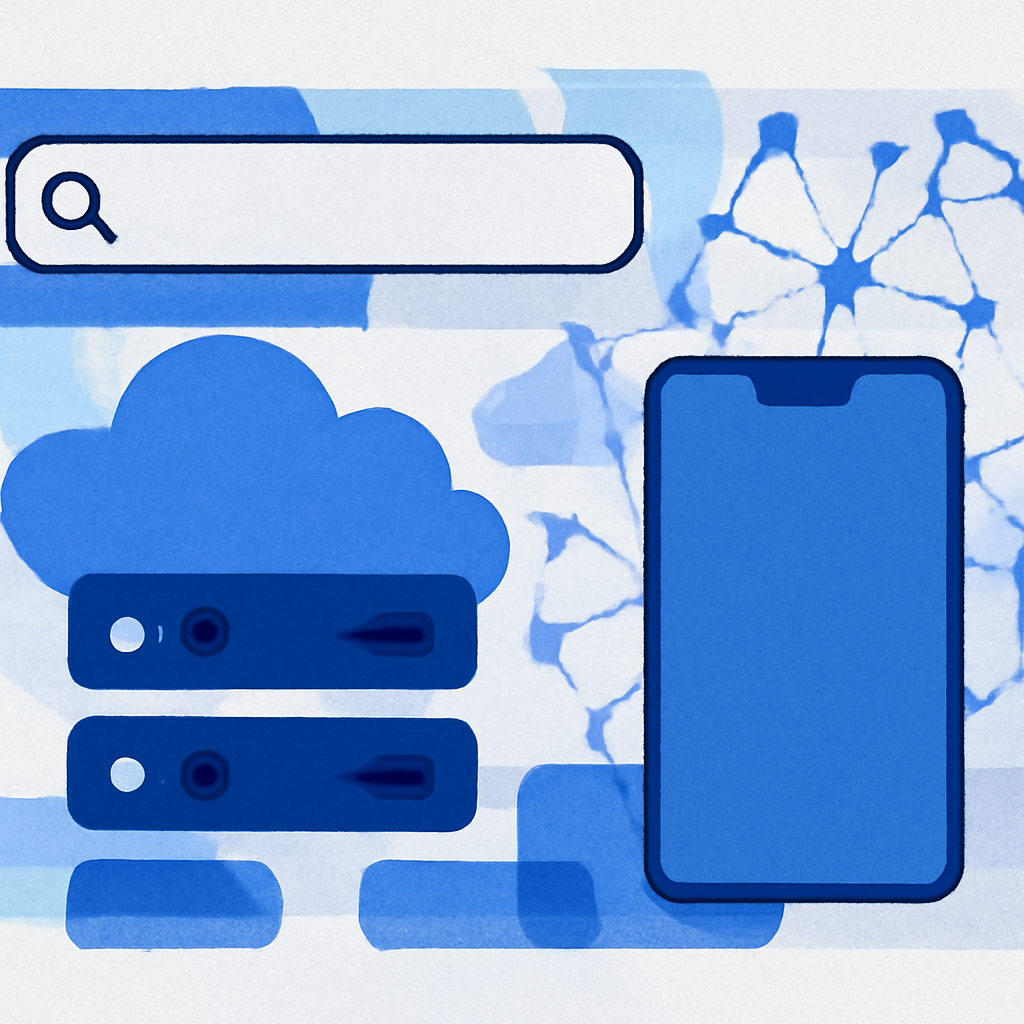
What Google actually does
Google is both a set of consumer products—search, maps, mail, video, and mobile operating systems—and a large enterprise platform that sells advertising and cloud services. Those consumer and developer-facing products feed datasets, usage signals, and distribution that the company uses to build increasingly capable machine learning systems and cloud services.
How the business model fits together
The company earns most of its revenue by matching people and intent with advertisers. Search and YouTube remain major ad platforms, while other products (apps, maps, and partner sites) also supply inventory. In parallel, Google monetizes infrastructure and AI through Google Cloud, which has been a fast-growing revenue driver as enterprises buy AI compute and services.
Why Android matters
Android is the dominant global mobile operating system, providing a distribution layer for Google services and partners. That scale gives Google reach for search, maps, and app discovery, and it makes Android a critical piece of how the company gathers signals used to improve personalization and product quality.
Google Cloud and the AI push
Google has explicitly positioned its cloud business as a primary route for enterprise AI adoption, offering managed models, developer tooling, and agent platforms that integrate the same foundation models used across consumer products. Investment in datacenters and specialized hardware has accelerated to meet the demand for large-scale AI workloads.
Machine learning as a product
Core to Google’s strategy is turning research models into consumer and business features: conversational assistants, image and video understanding, code generation, and on-device intelligence for phones and watches. The company bundles multiple model tiers—from lightweight on-device variants to large cloud-hosted models—so features can scale from personal gadgets to enterprise applications.
Data, privacy, and user controls
Google collects signals to personalize results and ads, but it also publishes policies and tools intended to let users manage data and control personalization settings. Those controls exist alongside regulatory scrutiny and ongoing compliance work in multiple jurisdictions, which affect product design and data handling choices.
What that means for developers and businesses
- Developers can embed pre-built models or build custom agents on cloud platforms that reuse the same ML foundation as consumer apps.
- Businesses evaluate cloud and AI services both for infrastructure and for pre-packaged capabilities like search, recommendations, and automation.
- Product teams must balance personalization benefits with privacy settings and regulatory requirements in the markets they serve.
Understanding Google requires thinking of it as an ecosystem: products that generate signals, models that create features, and commercial platforms that turn technical capability into revenue. Each layer—consumer apps, Android, cloud infrastructure, and AI models—reinforces the others, shaping how Google develops and distributes new technology.

