
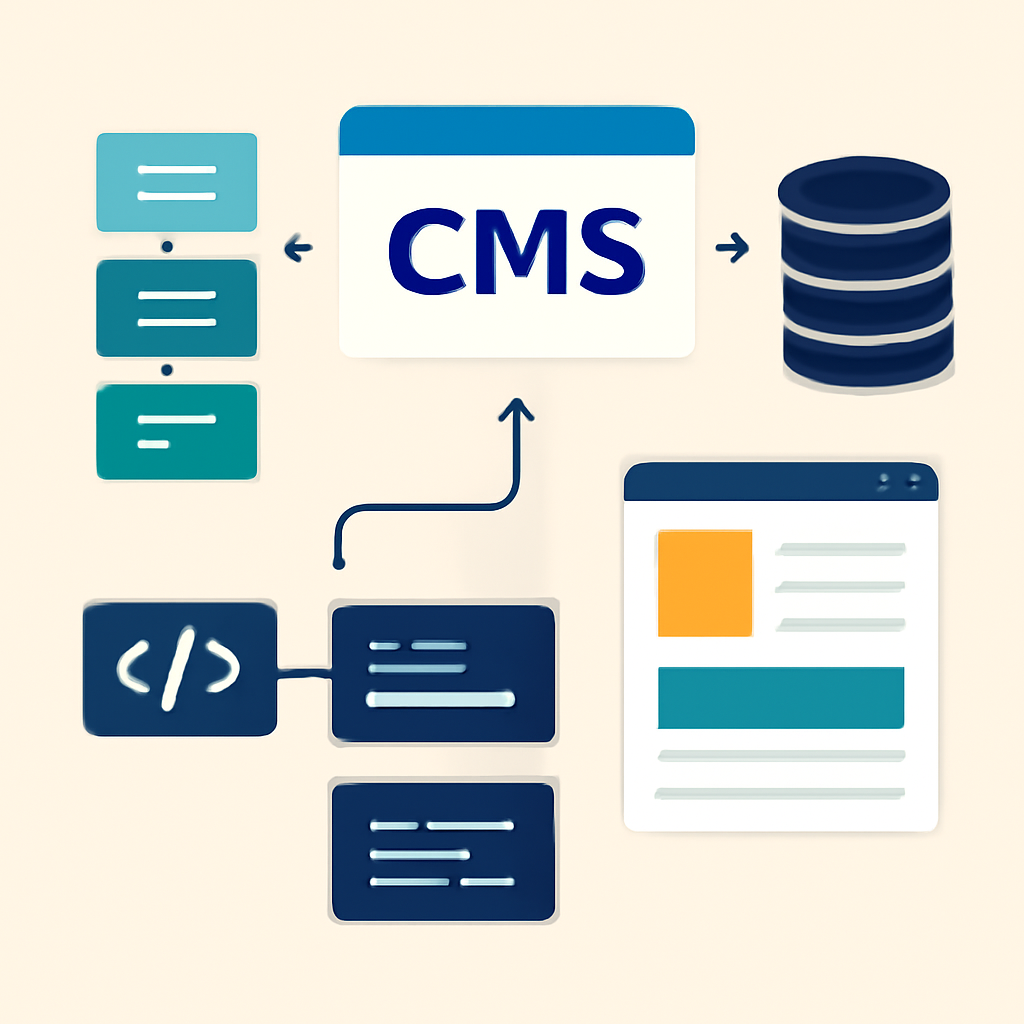
Drupal is an open-source content management framework built in PHP that emphasizes flexibility, structured content, and integrations. It’s used where content relationships, security, and multisite or enterprise-grade needs matter more than pure simplicity. Unlike lightweight website builders, Drupal favors a modular, developer-friendly architecture that scales from campaign microsites to large government and institutional platforms.
How Drupal is built
Drupal core provides a set of content types, fields, user roles, and configuration management; most site capabilities come from composing core features with contributed modules and custom code. Modern Drupal releases use standard PHP tooling: Composer for dependency management, a Twig-based templating layer for theming, and several reusable Symfony components. That foundation makes Drupal easier to integrate with other systems and to adopt contemporary PHP best practices.
Key features that set Drupal apart
- Flexible data model: Custom content types and fieldable entities allow precise modeling of structured content (products, news, events, directories) without forcing everything into generic posts or pages.
- API-first capabilities: Core modules expose structured content via JSON-based APIs, enabling decoupled (headless) front ends or multi-channel publishing.
- Layout and editorial tools: Built-in layout and block systems let editors arrange pages visually without a developer for each change, while configuration management supports staging and deployments.
- Extensibility and integrations: Large contrib ecosystem and Composer-friendly modules let you integrate identity providers, search engines, e-commerce systems, and external APIs.
- Security and governance: Drupal’s community and security team are organized to support long-term maintenance for mission-critical sites.
Who should choose Drupal
Choose Drupal when your project needs complex content relationships, strong access-control rules, multi-site or multi-language deployments, or deep integrations (SSO, external CRMs, complex workflows). Organizations with in-house or agency development capacity will get the most value because modern Drupal workflows typically assume Composer, command-line tooling, and versioned configuration.
When another tool may be better
If you need a simple brochure site, blog, or a site you must build and maintain without developer support, a simpler hosted builder or a lightweight CMS can save time and money. Also consider hosting constraints: some shared hosts do not provide the Composer/SSH access that modern Drupal sites expect.
Practical notes for builders
- Check platform requirements before starting: current major branches have minimum PHP and database requirements and rely on Composer-managed dependencies.
- Plan upgrades: major version moves are smoother than they used to be, but they still commonly require dependency and code changes; treat them as part of lifecycle planning.
- Use local development tools and containers to mirror production (DDEV, Lando, Docker) — they simplify Composer, PHP, and database version management.
- Consider whether you want a decoupled front end. Drupal’s API-first features make this straightforward, but decoupling adds complexity and additional maintenance surface.
Drupal rewards projects that need structure, integration, and long-term maintainability. For teams that can invest in development and operations, it remains one of the most capable open-source CMS platforms for complex web projects.

