
Digital Marketing Fundamentals
Digital marketing is how organizations reach, engage, and convert customers using online channels — from search engines and email to social platforms and ads. Though tactics change fast, the fundamentals remain: define goals, know your audience, choose the right channels, create useful content, and measure what matters.
Core channels and what they do
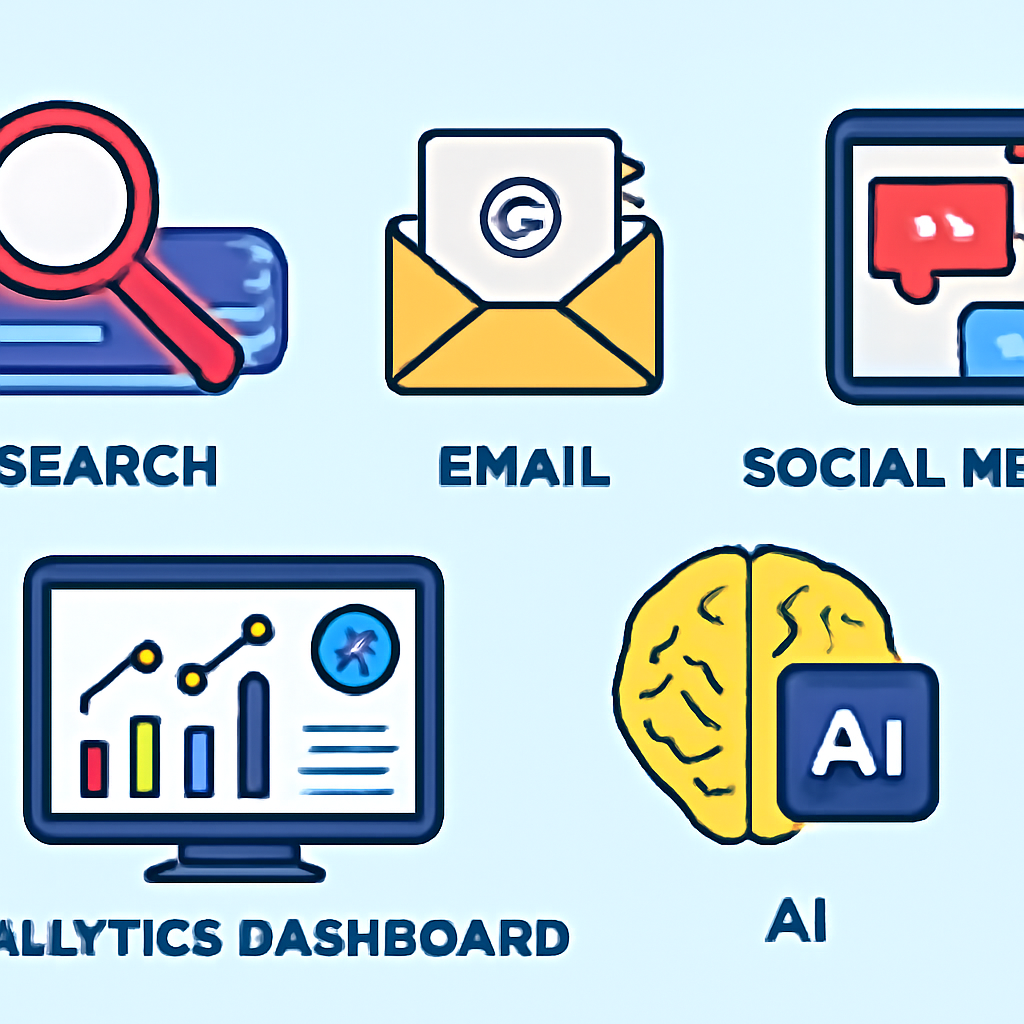
- Search (SEO and SEM): Improve visibility in organic search and use paid search ads to capture intent-driven queries.
- Content marketing: Publish articles, guides, and video that educate your audience and build authority over time.
- Social media: Build relationships and reach using organic posts and paid social ads; short-form video has become a major engagement driver.
- Email: Deliver targeted messages and automated journeys to subscribers with strong ROI when used responsibly.
- Paid display and programmatic: Scale reach with targeted creatives across sites, apps, connected TV, and audio channels.
- Affiliate and influencer marketing: Leverage partners and creators to expand reach and drive conversions.
- Analytics and attribution: Track performance across channels and tie activity to business outcomes so you can allocate spend intelligently.
A practical five-step approach
- Set clear goals: Choose measurable outcomes (e.g., leads, signups, revenue) rather than vanity metrics.
- Map your audience: Identify intent, channels they use, and the information they need at each stage of the journey.
- Pick channels to test: Start small with one or two channels that match audience intent; use experiments to validate before scaling.
- Create consistent value: Invest in content and creative that answers real questions or solves problems — consistency builds trust and discoverability.
- Measure and optimize: Use event-level analytics, cohort analysis, and attribution models to understand what drives outcomes and iterate fast.
Measurement basics
Define a small set of KPIs for each goal (conversion rate, CAC, LTV, ROAS). Instrument tracking (server- and client-side where appropriate), connect channel data to CRM, and use dashboards to spot trends. Regularly validate experiments with proper sample sizes and track both short- and long-term value — some channels show returns slowly but compound over time.
Modern considerations for long-lived programs
- Privacy-first data strategies: With restrictions on third-party cookies and rising regulation, prioritize first-party and zero-party data collection and transparent consent practices.
- AI as an enabler, not a shortcut: AI can speed content creation, personalization, and optimization, but it relies on high-quality data and human oversight to preserve brand voice and compliance.
- Short-form video and commerce: Short video formats and in-platform shopping features are major attention and conversion drivers — adapt creative and measurement accordingly.
- Automation and orchestration: Use automation to scale repetitive tasks (ad testing, reporting, personalization) while keeping strategy and creative review human-led.
Final tips
Focus on a few channels where your audience already is, measure outcomes not activity, treat data quality as a strategic asset, and design experiments so you can learn quickly. Over time, a disciplined approach that balances creativity, measurement, and responsible data use will compound into sustainable growth.

