
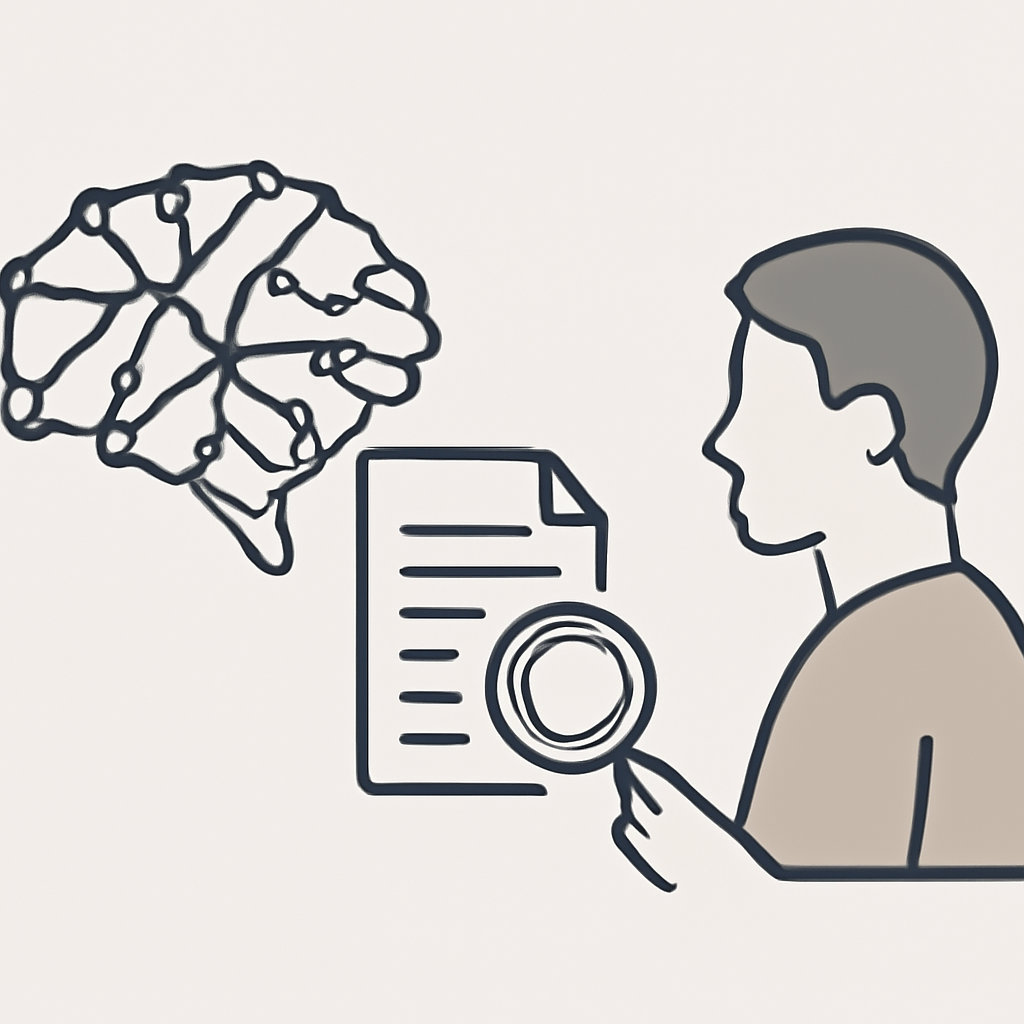
Large generative AI systems—often called foundation models—start by learning statistical patterns from huge collections of text, images, or other data. That broad pretraining gives a single model general-purpose abilities (summarizing, translating, drafting, answering questions) that can be adapted to many tasks rather than training a separate model for each job.
Two stages under the hood
Most systems are created in two main stages. First, a model is pretrained with a self-supervised objective (for example, predicting the next word or filling a masked token) on large, diverse datasets. Second, the pretrained model is adapted for specific uses by fine-tuning, instruction-tuning, or adding feedback from humans to shape its behavior. These steps let a single “foundation” model serve many downstream tasks.
How human feedback and alignment work
To make outputs more useful and better aligned with human preferences, developers commonly use human labeling and reinforcement-style training. In this approach, people rate or rank different model outputs; a reward model is learned from those judgments and then used to fine-tune the generator so it produces answers that humans prefer. This technique is widely used to reduce unsafe or unhelpful behaviors, though it does not eliminate all mistakes.
Why models sometimes “hallucinate”
Generative models can produce plausible-sounding but incorrect or invented information—commonly called hallucinations. Hallucination arises because models generate text by sampling likely continuations from learned patterns; they do not have a guaranteed connection to verified facts. This is an active research area with many taxonomy and mitigation studies showing hallucination remains a practical limitation—especially for specialist or time-sensitive queries.
Practical ways to reduce errors
- Ground outputs in retrieved data: Retrieval-augmented generation (RAG) is a common pattern that attaches a document-retrieval step to generation so the model can cite or use up-to-date, relevant passages rather than relying solely on its internal knowledge. Systems that combine retrieval with generation typically produce more factual and specific responses for knowledge-heavy tasks.
- Ask for sources and show evidence: Prompt models to return source text, quotes, or short citations; then verify those sources independently.
- Use conservative prompts: For factual work, ask for brief answers, request confidence levels, and require citations or step-by-step reasoning so errors are easier to spot.
- Combine human review: Keep a human in the loop for high-stakes outputs (medical, legal, financial) and use automated checks where feasible.
What practitioners and readers should keep in mind
Generative AI is powerful but probabilistic: fluency and authority can be mistaken for correctness. The safest deployments pair large models with retrieval, verification layers, and human oversight; they track performance with domain-appropriate tests and keep documentation about training data, capabilities, and limitations. Research and industry guides repeatedly emphasize that mitigating hallucination and ensuring reliable behavior require multiple technical and process safeguards, not a single fix.
For everyday users, treat model outputs as starting points: verify facts, ask follow-up questions, and prefer tools that provide linked evidence or let you connect the model to trusted internal data. For teams building with these models, prioritize retrieval grounding, transparent evaluation, and human review where errors carry material risk.

