
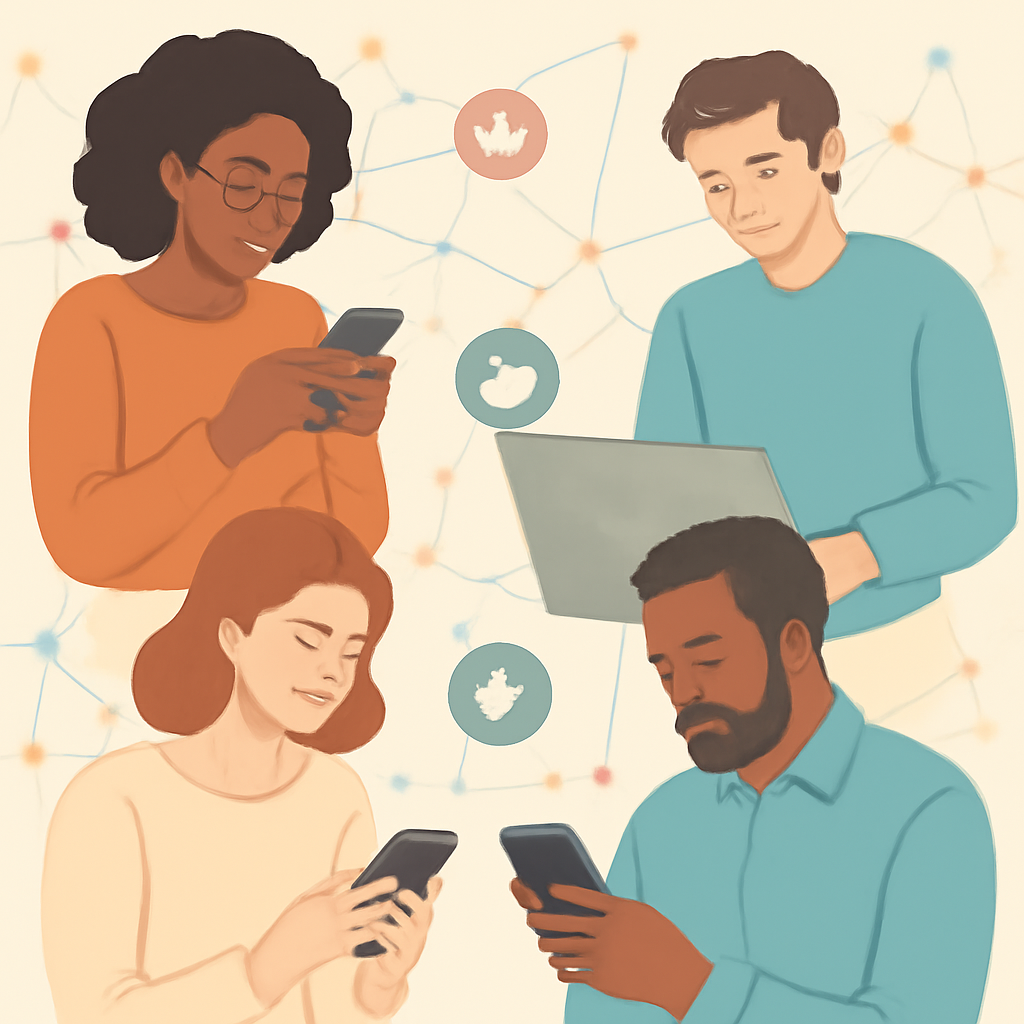
Social networks are more than apps for sharing photos or news — they are systems that collect signals about your behavior, use machine learning to personalize what you see, and connect millions of people into rapidly changing communities. Understanding the basic mechanics, the common risks, and a few simple habits can help you get the benefits without unnecessary harms.
How platforms decide what you see
Most major platforms do not show content in strict chronological order. Instead they score and rank posts using many signals — your interactions (likes, comments, watch time), the content itself (captions, hashtags, sounds), and device or account settings — then predict what you are likely to engage with and surface the highest-scoring items. Platforms also add diversity and safety rules to avoid repetitive or ineligible content, but personalization remains the main driver of what appears in feeds and recommendation pages.
Who uses social media and how much
Usage is widespread but varies by platform and age: some services reach most adults while others are concentrated among younger users. Many people visit a handful of platforms daily, and short-form video recommendation systems now account for a large share of time spent on social apps. Global tracking projects and national surveys show steady, high engagement across demographics, with younger cohorts typically spending the most time.
Main risks to watch for
Privacy and data collection: Platforms gather extensive behavioral data to personalize content and ads; regulators have documented widespread data practices and urged stronger limits and protections, especially for children and teens.
Mental health and well-being: Reviews of the research find mixed results — some studies show small negative associations between heavy or certain types of use (for example, passive scrolling or prolonged late-night sessions) and mood, sleep, or anxiety, while other work highlights social connection and support as benefits. The relationship is complex and depends on age, use patterns, and personal vulnerability.
Misinformation and harassment: Algorithmic amplification and viral spread can push misleading or harmful content widely and quickly. Platforms use content policies and enforcement systems, but removal is not perfect and exposure can still be rapid.
Practical habits for safer, healthier use
- Tweak notifications: Turn off non-essential alerts so your attention isn’t constantly interrupted.
- Curate your feed: Use built-in controls (mute, unfollow, “not interested”) and follow accounts that add value to your day.
- Set time limits: Try app timers or scheduled “no-screen” periods to protect sleep and focus.
- Check permissions: Review app permissions and privacy settings; limit broad sharing and location access where possible.
- Question viral claims: Pause before sharing; verify with reliable sources when content seems sensational or doubtful.
- Support young people: Talk with teens about what they see and teach critical habits (privacy settings, reporting, balanced time use).
When to step away or get help
If social media use is changing your sleep, increasing anxiety, worsening self-image, or displacing essential activities, consider a deliberate break or a reduction experiment (short-term abstinence or scheduled limits). If problems persist, talk with a trusted professional — digital habits interact with mental health but are rarely the sole cause.
Social media brings powerful tools for learning, connection, and creativity — and it also reshapes attention, privacy, and social risks. A few simple settings and routines can preserve the upside while reducing many common downsides.

