
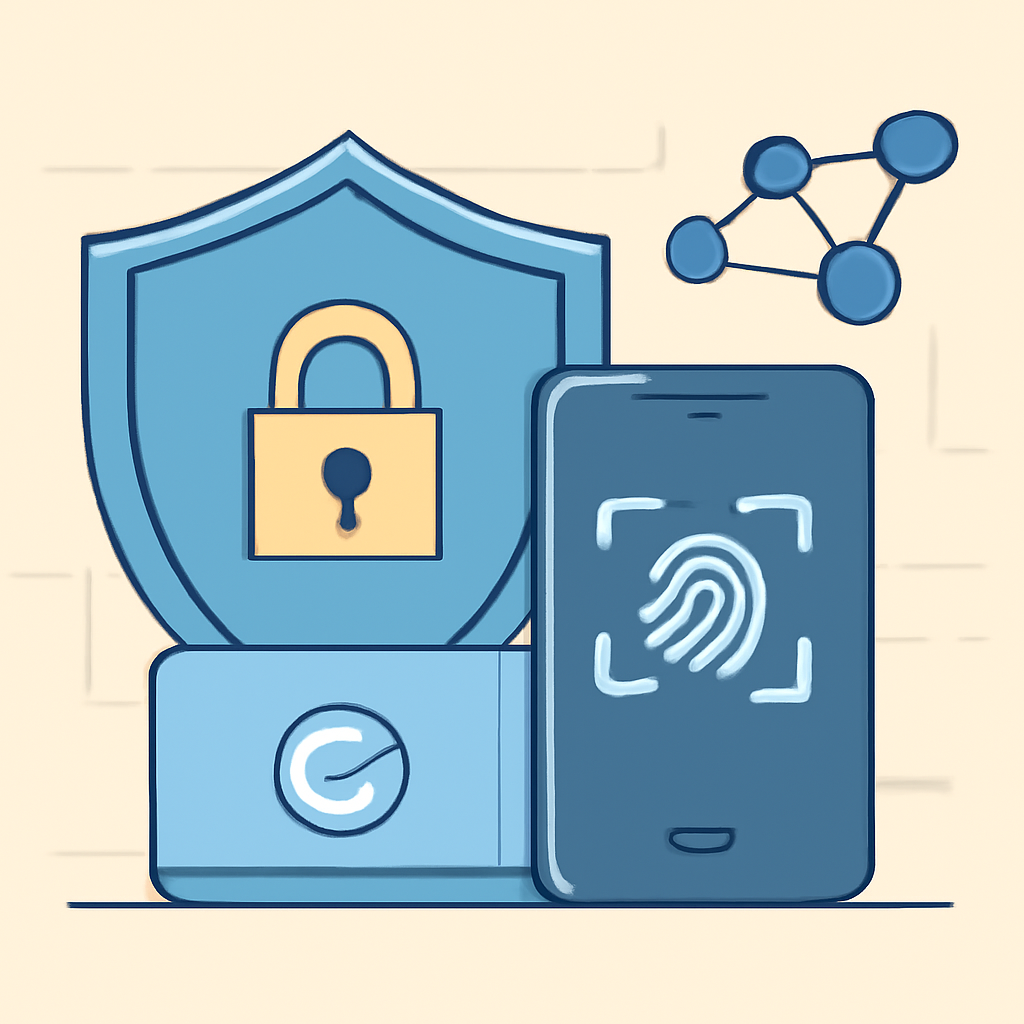
Good cybersecurity starts with routine habits: a few consistent steps taken by individuals and organizations stop most common attacks before they escalate. Think of security as layers — authentication, software updates, data backups, access controls, and monitoring — that together make it far harder for an attacker to succeed.
Core practices that matter
Use strong, phishing‑resistant authentication wherever possible. Replace weak second factors (SMS or email codes) with phishing‑resistant options such as passkeys, hardware tokens, or platform biometrics, and require multifactor authentication for critical accounts and remote access. These methods reduce the most common credential-based compromises.
Keep systems and applications up to date and centrally managed. Patching operating systems, firmware, and software closes vulnerabilities attackers exploit to gain initial access or move laterally. Where possible, automate updates or use a managed patch program so critical fixes are applied promptly without waiting for manual steps.
Back up data frequently and make backups resilient. Maintain copies that are isolated from the main network (offline or immutable/cloud-to-cloud backups) and test restores regularly. Reliable backups are the fastest path to recovery from ransomware and many other destructive incidents.
Limit who can access sensitive systems and data. Apply least‑privilege principles so users and services have only the access they need. Segment networks so an intrusion in one area cannot freely roam to critical assets, and separate personal accounts from business ones to reduce cross‑contamination.
Detect and respond: use layered detection and an incident playbook. Endpoint detection tools, centralized logging, and alerting help spot abnormal activity early. Have a concise response plan that includes communication steps, data restoration procedures, and external contacts to escalate to if needed.
A one‑page checklist
- Enable phishing‑resistant MFA on email, VPN, admin, and cloud accounts.
- Enable automatic updates or run a regular patch schedule for OS, firmware, and apps.
- Back up critical data daily (or as often as operations allow) and keep an offline/immutable copy.
- Use endpoint protection with logging and central monitoring; review alerts weekly.
- Apply least privilege; remove inactive accounts and review permissions quarterly.
- Train users on phishing recognition and run simulated phishing exercises periodically.
- Document an incident response checklist and test it with tabletop exercises once a year.
These steps scale from individuals to small teams. Start small (pick three controls to implement this month) and measure progress: tracking adoption of MFA, patch coverage, backup restore tests, and the number of privileged accounts will show real improvement over time.
Security is an ongoing process: defending a system means maintaining those layers, testing assumptions, and adapting to new threats. Regular, concrete habits are the most reliable way to make digital life safer for people and organizations alike.

