
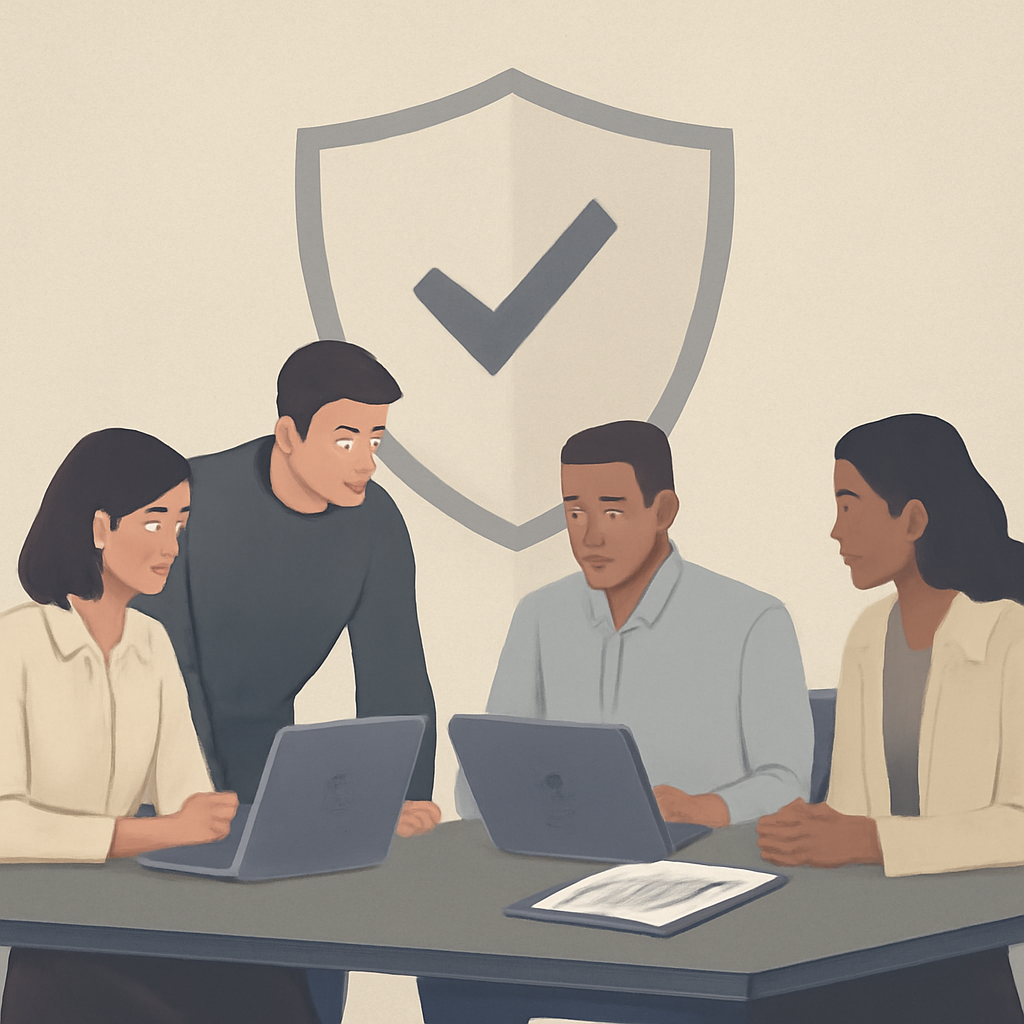
Small teams and local businesses face the same sophisticated threats as larger organizations, but usually with fewer people and smaller budgets. A practical, layered approach—prioritizing the most effective, low-friction controls first—gives small organizations the best return on limited resources while making recovery realistic if an incident occurs.
Why a layered approach matters
Attackers now move faster and target weak links: unpatched software, exposed credentials, suppliers and ungoverned tools. Rather than relying on a single control, combine simple protections (strong access controls, backups) with detection and a tested response plan so a single failure doesn’t become a catastrophe.
Six practical functions to build
- Govern and identify: Start with an inventory of devices, cloud services and sensitive data. Mark what’s critical and who owns it so you can prioritize effort and recovery order.
- Protect: Enforce multi-factor authentication for all accounts, remove unnecessary admin rights, enable full-disk encryption on laptops, and configure automatic updates or scheduled patching for systems and apps.
- Detect: Enable centralized logging for email, identity services and key servers. Lightweight endpoint detection and response (EDR) or managed detection services can alert a small team far faster than ad hoc review.
- Respond: Document an incident response plan, run tabletop exercises with leadership, and maintain an off-network contact list and decision checklist so everyone knows roles during an incident.
- Recover: Maintain regular, tested backups stored offline or on an immutable service. Practice restores periodically so the team can meet recovery time objectives without surprises.
- Improve: After any near-miss or incident, update procedures, patch windows and training. Treat “near misses” as free lessons to strengthen defenses.
High-priority, low-cost controls
- Make MFA mandatory for email, admin consoles and cloud services.
- Automate patching where possible and maintain a documented patch schedule for exceptions.
- Restrict admin privileges; use separate admin accounts and remove local admin rights from everyday laptops.
- Back up critical data regularly and test restores on a scheduled cadence.
- Use a password manager and train staff to spot social-engineering attempts (phishing, SMS scams, voice impersonation).
Incident readiness checklist
- Written incident response plan with named roles and escalation points.
- Regular tabletop exercises involving executives and IT or the MSP.
- Verified and tested backups (at least one offline copy).
- Inventory of third-party services and contracts; a plan to contact vendors after an incident.
- Insurance and legal contacts identified, if applicable.
Where to focus next
Start by reducing the most likely attack paths: ensure timely patching and strong identity controls, then add detection and response measures. If resources are very limited, consider managed services (MSSP or MDR) for monitoring and incident response support—outsourcing detection often beats trying to build a full team overnight.
Security is iterative: prioritize simple, high-impact steps, measure progress, and repeat. Small teams that invest modestly in layered defenses and in practicing their response will dramatically reduce both the chance of a breach and the cost of recovery.

